ロリィタ・ファッションは趣味ですか?それとも生活のそのものですか?
ゾーイ・ゴールデンフェルド
1.はじめに
私の卒業研究に選んだテーマはロリィタ・ファッションである。4年間ぐらいロリィタを着て、人生に大きく影響を受けている。2013年に初めてロリィタと出会った。シカゴのコスプレ・コンベンションに行き、そこで3人のロリィタを見た。あんなに可愛いくて、雅やかな洋服を見たことがなかった。そのロリィタ達と少し話して、その洋服の名前は「ロリィタ・ファッション」だと教えてもらった。帰ってから、ネットで調べ、ロリィタの世界について学んだ。しかし、その時、私は高校生で、お金がなかったので、買えなかった。高校を卒業した後、仕事を見つけて、給料で初めてのロリィタドレスを買った。そのドレスを初めて着てみた途端、完全にロリィタに心を掴まれた。
その頃から、ロリィタは私の人生に大きく影響を与え始めた。ロリィタを着始める前は、私は静かで内向的な人であったが、ロリィタを着ると、自信を持ち、他の人に話しかけ、友達ができた。そして、ロリィタの服を着る時、きれいに見えるために、自分の顔や髪の毛の手入れをし、健康的な食べ物を食べ、運動もし始めた。このようなふうにロリィタは私の人生に大きく影響与えたので、私にとって、趣味だけでなく、生活そのものである。それゆえ、他のロリィタもこのような、もしくは似ている影響があるのかと研究をしようと考えた。他の人にロリィタはどのような影響を与えたのか。ロリィタ・ファッションは他のロリィタ達にどのように映るのか。あるいはただの趣味なのか。それとも生活のそのものなのか。この質問の答えを知りたかったので、私の卒業研究のテーマはロリィタ・ファッションを選んだ。そして、調査前に私の立てた仮設は、「ロリィタは趣味以上で、生き方である」というものである。
2.先行研究:ロリィタ・ファッションについて
2.1 ロリィタ・ファッションの歴史
ロリィタ・ファッションは日本において1980年代に生まれたファッションス・タイルである。Baby, The Stars Shine BrightとかAngelic Prettyというインディーズ・ブランドが乙女っぽい、可愛い服を売り始めた。しかし、現代のロリィタ・ファッションとかなり違かった。ゴシック・ロリィタはまだ出現したいなかった上に、スカートはもう少し長く、まだパニエをあまり履いてなかった。
しかし、90年代の後半に大きく変化したのである。その頃の人気ヴィジュアル系バンドのファンはヴィジュアル系のミュージシャンに触発されたコスプレや服を着始め、特にマリスミゼルのギタリストのMana。Manaは「エレガント・ゴシック・ロリィタ」を創作し、初めてのゴシック・ロリィタのファッション・ブランドを作成し、「Gothic & Lolita Bible」という雑誌も公開し始めた。Manaの貢献で、ロリィタ・ファッションはブームを起こした(Monden, 2013)。
90年代の頃から、ロリィタはどんどん進化し、今の外観になった。そして日本だけでなく、外国にもロリィタを着る人の数が増えてきた。アメリカ、ヨーロッパ、中国、そして、カナダにおいて、たくさんのロリータのコミュニティが作られた。日本以外の国では、珍しい洋服を着ている1人の女性は嫌がらせをさせる可能性があるので、ロリィタはロリィタ服を着て、外出したかったら、他の複数のロリィタと一緒に行く方がもう少し安全だと思われた。ロリィタはネットで他のロリィタと繋がり、ある領域に住んでいて繋がっているロリィタの数は増え、徐々に地域の現実のコミュニティーになっていた(Monden, 2008)。今、全てのこのロリィタ・コミュニティーはネットで繋がっているので、どこに行っても、他のロリィタと出会うことができる。
2.2 ロリィタ・ファッションの特徴と種類
ロリィタ・ファッションは様々なスタイルがあるのだが、その典型的な姿は、レースのたっぷりあるワンピースやブラウスとボンネットかヘッドドレスという組み合わせだ。一番大事なのは、ふわふわな姿を作るために、ワンピースの下に履くパニエだ。
ロリィタ・ファッションは様々な着方やスタイルがあるのだが、一番人気の3つの種類は甘いロリィタとゴシックロリィタ、そしてクラシックロリィタである。甘いロリィタはピンクやパステルの色を使い、可愛い動物や花、スイーツのモチーフなどがあるドレスは主要な特性だ。ゴシックロリィタは、もう少し大人らしくて、主要な特性は黒いシンプルなデザインのドレスだ。最後に、クラシックロリィタは、ロココ・フランスやヴィクトリアン・イギリスや他の歴史の時代に触発された大人らしくてエレガントな洋服である(Winge, 2008)。
3.調査方法
6人のロリィタに面接をして、答えを集め、比べた。カフェでロリィタを着ている間に面接をした。個別の面接は20分から1時間ぐらいまでかかった。面接の対象の人々は様々な年齢で、22歳から32歳までだった。全員は1年間以上ロリィタ・ファッションを着て、2年間から13年間までだが、多数は8年間から13年間までぐらいだった。全部の面接は多少の違いはあるものの、同じ質問で始めた。質問は「何年間ロリィタ・ファッションを着ているか。」、「ロリィタは自分の人生に影響を与えたか。」、「ロリィタは自分の生活を改善したか。それとも逆効果を及ぼしたか。」などだった。
4.調査結果
面接をした人の中で、皆は「ロリィタは単なる趣味ではない」と語った。たくさんの興味深い話を聞いたが、4人のロリィタのSさんとDさんとEさんとCさんの話は特に多くの有意な情報を得た。
4.1:Sさんの場合
Sさんの場合では、10年間ロリィタを着ていて、様々な経験があった。Sさんは慢性疾患を持って生きていて、その病気の影響でいつも疲れ、簡単に体重が増えてしまうのである。家を出して,どこかに行くのはSさんにとってかなり辛いので他の人のように友達と一緒に遊びに行くのは大変である。そして体重がよく変動するから、着やすくて似合う服を見つけるのは簡単ではない。しかし、ロリィタのワンピースはたいてい後ろにエラスチックがあるから、サイズによらず着やすいのである。その上、ロリィタはたいていカフェや美術館のような落ち着いた場所で会うから、Sさんは家を出ても、疲れすぎない。
「ロリィタを着る時、きれいになったという気持ちが生まれ、少し気分がよくなる」とSさんは語った。そしてたくさんの友達ができたので、ずっと家の中にいる代わりに、Sさんはロリィタの友達と一緒にカフェやお茶会に行き、楽しむことができる。このように、ロリィタはSさんの人生に大きく影響したのである。
4.2:Dさんの場合
Dさんはモデルと英語の先生として日本で働いている30歳の女性だ。2年ぐらい日本人の旦那さんと一緒に日本に住んでいる。17歳の時にロリィタを着始め、その頃からロリィタは人生に大きく影響を与えた。ロリィタから日本や日本語に興味を持ち、大学で日本語を勉強し、日本人の留学生に英語を教え始めた。そこで今の旦那さんと初めて会った。そして、ロリィタのコーディネートの写真を取っているうちに、モデルをするのが好きだと悟った。今、様々なロリィタや普通の服のブランドのためにモデルをしている。仕事以外、Dさんは関西のロリィタコミュニティーのリーダーとして関西に住んでいるロリィタ達のためにイベントの計画をし、外国人のロリィタと日本人のロリィタが繋がるのを手伝い、ブランドやデザイナーの情報をロリィタに伝える活動をしている。
「服だけですけど、私は人生で完全にロリィタの虜になった」とDさんは語った。もし17歳の時にロリィタに出会わなかったら、今の仕事や旦那さんや生活は存在しない可能性があった。「ロリィタは単なる趣味ではない。私の人生そのものだ」とDさんは続けた。
4.3:EさんとCさんの場合
Eさんに「ロリィタは自分の人生を影響を与えたか」と質問した時、「ロリィタのおかげで私は創造性を取り戻した」と答えた。Eさんは長い間ロリィタを着たいと思っていたが、2年間前いよいよ着出した。若い頃から絵を描くのが大好きだったが、成長した時うつ病と診断され、描くやる気は消えた。しかし、ロリィタを着始めて、少し自信を持つことができ、情熱を感じ、また描けるようになった。
Cさんはニュージーランドから来て、日本に住んでいる大学生である。5年間ロリィタ・ファッションを着て、自分のロリィタの服をデザインして作るのが好きだ。Cさんが思うに、外国人にとって、日本で友達をつくるのは難しい。しかし、ロリィタ・コミュニティーがあるので、多くの素敵な日本人と外国人の友達ができた。たいてい知らない人と初めて会う時は少し不安になるが、ロリィタであればもう共通の趣味があるから話しやすくなる。世界中、どこに行っても、ロリィタ・コミュニティーがあればロリィタと連帯でき、友達になれる。一般に、女性はファッションに興味を持てば、およそに社会から軽薄かわがままとして見られる。しかしロリィタなら、恥ずかしくなく、堂々と自分のファッションを好きだと言えるのが重要なポイントである。他のロリィタと一緒なら、自由にファッションについて話せるのである。
5.まとめと考察
ロリィタ・ファッションは80年代の日本において生まれたファッション・スタイルである。90年代にManaというヴィジュアル系ミュージシャンのおかげで大きく進化し、ブームを巻き起こし、世界中に広まった。ロリィタを着ている人はネットで他のロリィタを着ている人と繋がり、ロリィタ・コミュニティーを作った。
ロリィタ・ファッションのおかげで、私の人生も大きく変化した。それゆえ、他の人も自分の人生にロリィタが影響を与えたか研究をしたかったのである。面接と研究をし始める前の仮設は「ロリィタは趣味以上で、生き方である」というものであった。6人のロリィタを面接をし、回答を収集し、比較した。そして、面接した人は全員「ロリィタは単なる趣味ではない」と同意した。全員はロリィタのおかげで人生や生き方が変わった。SさんとCさんは友達ができ、Dさんは旦那さんや仕事を見つけ、Eさんはうつ病を克服し、創造性を取り戻した。
6.結論
基本的に、ロリィタ・ファッションはただのファッションスタイルである。しかしながら、ロリィタを着る人達によると、ロリィタはファッションスタイルだけでなく、生活そのものだそうである。ロリィタ・ファッションは人の人生を変化を与える力がある。シャイな人は友達ができ、普通の人は美しいお姫様になれ、人生に不安な人は自信を持つようになれる。この論文のために面接したロリィタの数は6人だったが、ロリィタ・ファッションの影響を受けた人は膨大な数になると推測されるのである。
7.書誌
Monden, M. (2008). Transcultural Flow of Demure Aesthetics: Examining Cultural Globalisation through Gothic & Lolita Fashion. New Voices, 2, 21-40.
Monden, M. (2013). 12 THE “NATIONALITY” OF LOLITA FASHION. Asia through art and anthropology: Cultural translation across borders, 165.
Winge, T. (2008). Undressing and Dressing Loli: A Search for the Identity of the Japanese Lolita. Mechademia 3, 47-63.
Thursday, April 25, 2019

Parallels Between the Structure of Matsuri and Visual Kei Concerts
For an anthropology class focused on Japanese matsuri and ritual practices, I had an assignment to write a response paper to one of the readings we did for class. I rather liked the paper I wrote, and decided to share it here.
While reading Herbert Plutschow’s “The Structure of the Festival” from his book Matsuri: The Festivals of Japan, I noticed something very interesting. I am currently conducting research for an ethnography on the usage of tesensu and headbanging as a form of ritual practice during visual kei concerts, and through my research and personal life have been to many visual kei and metal concerts, called lives. These lives operate in a very similar way to the structure of the matsuri as described by Plutschow. In this paper, I will analyze the three phases of a matsuri: kami-oroshi, kami-asobi, and kami-okuri as they relate to visual kei concerts, and draw parallels between the practices associated with their respective phases in matsuri and practices associated with visual kei concerts.
Kami-oroshi as it functions in matsuri is the ascent or arrival of a deity. Plutschow describes it as the “ritual creation of disorder” (Plutschow, page 2). People freed from everyday constraints of rank and order act in ways that may seem outlandish. The boundaries of order and time are eroded and social status becomes irrelevant. Plutschow says that people may “sexually indulge themselves… show off, shriek and violently thrash about” (page 3).
Similar blurring of boundaries and rank, as well as frenzied behavior can also be observed at visual kei lives. The boundaries of gender are crossed, with crossdressing of performers and/or audience members extremely commonplace. Performers and often audience members wear bizarre, showy, extravagant costumes or hair, instead of their “everyday” clothes which are usually normal fashion like any other Japanese person. The audience acts as one unit, doing repetitive hand motions called tesensu (手扇子) or headbanging along to songs, and occasionally do “dives,” in which one person runs to the rail, slams against it violently, and runs back. Between songs, audience members often shriek or yell the members’ names, as if invoking a heavenly deity.
Sexual lasciviousness, like in kami-oroshi, is also commonplace at visual kei concerts, although not to the extent of orgies. However, performers may often imitate sexual situations on stage or make sexual gestures or movements. One band even famously sells sex toys at their merchandise table. In addition, one of the tesensu movements involves holding one’s hands up and widening and closing the gap between them. According to one person whom I interviewed, this movement was initially meant to symbolize legs opening, indicating one’s desire or willingness to engage in sexual activities with a band member.
Despite all this outlandish behavior, most visual kei band and audience members are completely normal and well-adjusted people. It is only when the boundaries between the “everyday” (日常) are erased that they enter a frenzied zone, much like participants in matsuri during the kami-oroshi. According to Plutschow, the kami-oroshi “brings deities and people together and emphasizes through its controlled confusion the equality among members of the community, as well as between man and deity” (page 4). Visual kei concerts operate in very much the same way: through the tesensu movements the audience moves as one, directed by the music played by the musicians, who in this situation function as a deity. Two people whom I have interviewed described tesensu as making them feel equal and connected with the crowd and the band, one part of a larger whole. This seems very similar to the function of the kami-oroshi as described by Plutschow.
The kami-asobi portion of a matsuri serves to reaffirm the order, often through ritual art or dance. “Art is used in this sequence as a ritual device to create order... Given this power, art can both soothe and reinvigorate deity and man,” Plutschow writes on page 5 of the text. In a visual kei live, the kami-asobi takes the form of the actual musical performance. The music and performances are all planned and rehearsed extensively beforehand, and though the bizarre behavior of the performers such as self-mutilation, destruction of band equipment, imitating sexual situations, spitting, and more may seem spontaneous, they are usually planned beforehand.
In addition, though the boundaries of order are blurred, the band is still very much separated from the audience by a physical (the rail between stage and audience) and emotional barrier (the view of band members as godlike figures). And though the headbanging and tesensu unites the audience and band members, it is ultimately the band who conducts the actions through their music and movements, making them in a higher position than the audience. Therefore, although order and the “everyday” is eroded and the audience is brought into a different world, there still exist boundaries and order set by the musical performance. This is just like how in a matsuri, kami-oroshi erases order while kami-asobi restores order.
The third and final phase of a matsuri is the kami-okuri, where the deity is sent back off to where they came from and bid farewell. Although it’s not usually elaborate, in some matsuri it can be very dramatic, with participants weeping and singing as they send of the deity, who is reluctant to leave. Once the kami-okuri is finished, the matsuri is complete, and life returns to normal. For visual kei lives, the encore takes the place of the kami-okuri. The audience often sings along to the final song, and tears are not unusual. Band members often seem reluctant to depart the stage as well, lingering and waving to the crowd and playing a last few bars of music before being called offstage by an irate stage manager.
After the band has left the stage and the lights come back on, the shrieking, frenzied audience returns to normal docility, putting their hair back in place, retouching their makeup and stepping back into their shoes. The band members occasionally come out after the performance to mingle with the audience, and an audience member who just thirty minutes beforehand might have been screaming a band member’s name tearfully while making a heart sign with her hands would be chatting completely normally with the member, no trace of the previous behavior remaining. The concert now over, the “everyday” is restored and the audience members shuffle off to catch the last train.
A visual kei live functions very similarly to a matsuri, with the three aspects of a visual kei live, audience-band participation, musical performance, and encore correlating with the three phases of a matsuri: kami-oroshi, kami-asobi, and kami-okuri. In this paper I have detailed each aspect of a visual kei live as they relate to the corresponding matsuri sequence, and provided arguments for how they are similar. Just as much as a matsuri does, visual kei lives serve to erase an established order and redefine them in context to the live, removing the audience from the “everyday” and introducing them for a little while into a world where order is changed, before sending them back out into the normal world.
Works Cited
Plutschow, Herbert. Matsuri: The Festivals of Japan. With a Selection from P.G. O'Neill's Photographic Archive of Matsuri. Taylor and Francis. Kindle Edition.
Parallels Between the Structure of Matsuri and Visual Kei Concerts
Kami-oroshi as it functions in matsuri is the ascent or arrival of a deity. Plutschow describes it as the “ritual creation of disorder” (Plutschow, page 2). People freed from everyday constraints of rank and order act in ways that may seem outlandish. The boundaries of order and time are eroded and social status becomes irrelevant. Plutschow says that people may “sexually indulge themselves… show off, shriek and violently thrash about” (page 3).
Similar blurring of boundaries and rank, as well as frenzied behavior can also be observed at visual kei lives. The boundaries of gender are crossed, with crossdressing of performers and/or audience members extremely commonplace. Performers and often audience members wear bizarre, showy, extravagant costumes or hair, instead of their “everyday” clothes which are usually normal fashion like any other Japanese person. The audience acts as one unit, doing repetitive hand motions called tesensu (手扇子) or headbanging along to songs, and occasionally do “dives,” in which one person runs to the rail, slams against it violently, and runs back. Between songs, audience members often shriek or yell the members’ names, as if invoking a heavenly deity.
Sexual lasciviousness, like in kami-oroshi, is also commonplace at visual kei concerts, although not to the extent of orgies. However, performers may often imitate sexual situations on stage or make sexual gestures or movements. One band even famously sells sex toys at their merchandise table. In addition, one of the tesensu movements involves holding one’s hands up and widening and closing the gap between them. According to one person whom I interviewed, this movement was initially meant to symbolize legs opening, indicating one’s desire or willingness to engage in sexual activities with a band member.
Despite all this outlandish behavior, most visual kei band and audience members are completely normal and well-adjusted people. It is only when the boundaries between the “everyday” (日常) are erased that they enter a frenzied zone, much like participants in matsuri during the kami-oroshi. According to Plutschow, the kami-oroshi “brings deities and people together and emphasizes through its controlled confusion the equality among members of the community, as well as between man and deity” (page 4). Visual kei concerts operate in very much the same way: through the tesensu movements the audience moves as one, directed by the music played by the musicians, who in this situation function as a deity. Two people whom I have interviewed described tesensu as making them feel equal and connected with the crowd and the band, one part of a larger whole. This seems very similar to the function of the kami-oroshi as described by Plutschow.
The kami-asobi portion of a matsuri serves to reaffirm the order, often through ritual art or dance. “Art is used in this sequence as a ritual device to create order... Given this power, art can both soothe and reinvigorate deity and man,” Plutschow writes on page 5 of the text. In a visual kei live, the kami-asobi takes the form of the actual musical performance. The music and performances are all planned and rehearsed extensively beforehand, and though the bizarre behavior of the performers such as self-mutilation, destruction of band equipment, imitating sexual situations, spitting, and more may seem spontaneous, they are usually planned beforehand.
In addition, though the boundaries of order are blurred, the band is still very much separated from the audience by a physical (the rail between stage and audience) and emotional barrier (the view of band members as godlike figures). And though the headbanging and tesensu unites the audience and band members, it is ultimately the band who conducts the actions through their music and movements, making them in a higher position than the audience. Therefore, although order and the “everyday” is eroded and the audience is brought into a different world, there still exist boundaries and order set by the musical performance. This is just like how in a matsuri, kami-oroshi erases order while kami-asobi restores order.
The third and final phase of a matsuri is the kami-okuri, where the deity is sent back off to where they came from and bid farewell. Although it’s not usually elaborate, in some matsuri it can be very dramatic, with participants weeping and singing as they send of the deity, who is reluctant to leave. Once the kami-okuri is finished, the matsuri is complete, and life returns to normal. For visual kei lives, the encore takes the place of the kami-okuri. The audience often sings along to the final song, and tears are not unusual. Band members often seem reluctant to depart the stage as well, lingering and waving to the crowd and playing a last few bars of music before being called offstage by an irate stage manager.
After the band has left the stage and the lights come back on, the shrieking, frenzied audience returns to normal docility, putting their hair back in place, retouching their makeup and stepping back into their shoes. The band members occasionally come out after the performance to mingle with the audience, and an audience member who just thirty minutes beforehand might have been screaming a band member’s name tearfully while making a heart sign with her hands would be chatting completely normally with the member, no trace of the previous behavior remaining. The concert now over, the “everyday” is restored and the audience members shuffle off to catch the last train.
A visual kei live functions very similarly to a matsuri, with the three aspects of a visual kei live, audience-band participation, musical performance, and encore correlating with the three phases of a matsuri: kami-oroshi, kami-asobi, and kami-okuri. In this paper I have detailed each aspect of a visual kei live as they relate to the corresponding matsuri sequence, and provided arguments for how they are similar. Just as much as a matsuri does, visual kei lives serve to erase an established order and redefine them in context to the live, removing the audience from the “everyday” and introducing them for a little while into a world where order is changed, before sending them back out into the normal world.
Works Cited
Plutschow, Herbert. Matsuri: The Festivals of Japan. With a Selection from P.G. O'Neill's Photographic Archive of Matsuri. Taylor and Francis. Kindle Edition.
Thursday, April 11, 2019
Visual Kei and Metal Live Report
One thing I've done a lot of while in Japan is go to concerts, namely visual kei or metal concerts (called lives). Visual kei is not really a genre of music, as there are hundreds of bands with different sounds and musical genres that fall under the umbrella of visual kei. It is more a type of visual style, hence the name, visual kei, which literally means "visual style."
Started in the early 80s by bands such as X, Der Zibet, Buck Tick, and D'erlanger, it describes a band that uses intense, shocking, provocative visuals along with elaborate costumes and stage performances (if they have the budget). In the 90s, the genre boomed with bands such as Malice Mizer, Kuroyume, L'arc~en~Ciel, Shazna, Dir en Grey, and more, each expanding the limits of the genre and establishing a new standard for visual kei bands and live performances.

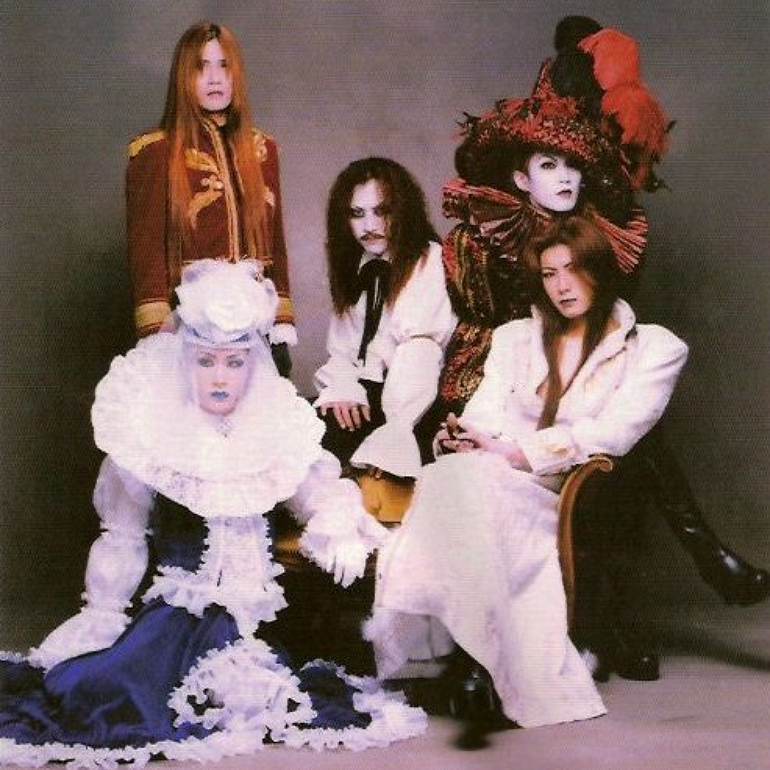
It's a genre that is entirely unique to Japan, and as it is quite removed from the mainstream most visual kei bands except for perhaps X and Dir en Grey perform overseas, so if you want to go to a visual kei live, you have to go to Japan. Of course, I've been to quite a few, and the details are below. These are also not in any way all of the lives I've been to, just a memorable few (that I have pictures for lol).
1. La'veil Mizeria in February
Modern band that was established a couple years ago, but they perform music and have the look of an old-school (kote kei) 90's era band, which is why I like them. Their music is kind of a mix between thrash metal and gothic metal, and they all have the very tall, colored hair and giant platform boots indicative of a 90s visual kei band.
Towards the end of the performance the audience did "dives," which is when the people in the front row lean over the rail and everyone else runs up, jumps into them forcefully, maybe gets to touch or shake the hand of one of the musicians, and then runs back. The singer got out a riding crop from who-knows-where and started whacking the other band members and then the audience members who divebombed the stage, which was pretty funny.
I kinda held back because I felt bad about potentially injuring one of the people leaning over the rail, but the guitarist Jaki noticed me and beckoned for me to come over. I came closer and he grabbed my arm, pulling me closer and I did the 'dive,' then he whacked me very gently over the head with the riding crop. It was oddly sweet, and I appreciate him trying to get me to join in with the performance. He also tossed me his guitar pick. Thanks, Jaki!
Around this time the singer went like "okay, I'm really tired," and he just sat down on the stage, continuing to scream. It was kinda funny, seeing this dude in crazy clothes with bright pink hair at least a foot tall sitting crosslegged on stage and shrieking with the force of a hundred angry harpies into the mic as the other musicians carried on as usual.
After the performance the musicians came out and went to the merch table or walked around, talking to the audience members. I bought cheki (polaroid pictures) from Jaki. (Because taking pictures during a performance is forbidden, they often sell cheki, little polaroid pictures the performers take before the performance). I thanked the performers for the good performance, and went home.


Started in the early 80s by bands such as X, Der Zibet, Buck Tick, and D'erlanger, it describes a band that uses intense, shocking, provocative visuals along with elaborate costumes and stage performances (if they have the budget). In the 90s, the genre boomed with bands such as Malice Mizer, Kuroyume, L'arc~en~Ciel, Shazna, Dir en Grey, and more, each expanding the limits of the genre and establishing a new standard for visual kei bands and live performances.
(X in the 1980s)
(Malice Mizer in the 90s)
It's a genre that is entirely unique to Japan, and as it is quite removed from the mainstream most visual kei bands except for perhaps X and Dir en Grey perform overseas, so if you want to go to a visual kei live, you have to go to Japan. Of course, I've been to quite a few, and the details are below. These are also not in any way all of the lives I've been to, just a memorable few (that I have pictures for lol).
1. La'veil Mizeria in February
Modern band that was established a couple years ago, but they perform music and have the look of an old-school (kote kei) 90's era band, which is why I like them. Their music is kind of a mix between thrash metal and gothic metal, and they all have the very tall, colored hair and giant platform boots indicative of a 90s visual kei band.
Towards the end of the performance the audience did "dives," which is when the people in the front row lean over the rail and everyone else runs up, jumps into them forcefully, maybe gets to touch or shake the hand of one of the musicians, and then runs back. The singer got out a riding crop from who-knows-where and started whacking the other band members and then the audience members who divebombed the stage, which was pretty funny.
I kinda held back because I felt bad about potentially injuring one of the people leaning over the rail, but the guitarist Jaki noticed me and beckoned for me to come over. I came closer and he grabbed my arm, pulling me closer and I did the 'dive,' then he whacked me very gently over the head with the riding crop. It was oddly sweet, and I appreciate him trying to get me to join in with the performance. He also tossed me his guitar pick. Thanks, Jaki!
Around this time the singer went like "okay, I'm really tired," and he just sat down on the stage, continuing to scream. It was kinda funny, seeing this dude in crazy clothes with bright pink hair at least a foot tall sitting crosslegged on stage and shrieking with the force of a hundred angry harpies into the mic as the other musicians carried on as usual.
After the performance the musicians came out and went to the merch table or walked around, talking to the audience members. I bought cheki (polaroid pictures) from Jaki. (Because taking pictures during a performance is forbidden, they often sell cheki, little polaroid pictures the performers take before the performance). I thanked the performers for the good performance, and went home.

(the cheki I got of Jaki (guitarist))

(guitar pics: one from the guitarist and one from the bassist)

(my coord for the live, I wore old-school style lolita)
2. Moi Dix Mois in March
Moi Dix Mois is a gothic metal band from the early 2000s, started by Mana, the guitarist of Malice Mizer and owner/designer of the gothic lolita clothing brand Moi Meme Moitie. I've been a fan of Mana for quite a while, and when a Moi Dix Mois live was announced I bought tickets as soon as they went on sale. It took me 20 minutes because the site kept crashing from too much traffic, and by the time I got a ticket I was in the very back. The tickets sold out in under an hour though, so I'm happy I managed to get one. I went to Tokyo, as did my friends who I'll call F and S. I became friends with F and S as we always saw each other at Kamijo lives, and inevitably ended up hanging out, going to cafes and doing karaoke together. They're both really great and I'll be so sad when I have to leave them to go back to America. :(
The performance was absolutely incredible. Just seeing Mana in person, even if it was from far away, was a dream come true. He's so elegant and beautiful and his guitar playing is absolutely wonderful, each guitar solo added ten years to my life. Even the way he headbangs is graceful! And the music was SOOO GOOD. Hearing it in person was magical!!

(Mana in all his goth glory)
The setlist was phenomenal too, the song Solitude live is so haunting and beautiful and Seth (the singer)'s vocal range is amazing, he sung the high parts perfectly. And when they performed Vizard, he fell to his knees screaming and I could feel it in my bones. It's a harder song that's mostly done in a death voice, but he made it sound emotional and beautiful while still emitting incredible screams.
It was Mana's birthday performance, and the band presented him with a bouquet of roses, which he then proceeded to rip up and then throw/give to audience members. He never talks or smiles in public so I don't know how he felt, but I think he had a good time. It was an amazing experience for me, I even cried. I really hope I'll be able to go to a Moi Dix Mois live again someday!

(Poster for the performance)

(Selfie with the poster!)

(My coord, almost entirely Moi meme Moitie)

(After the live I went to Vampire Cafe with F and some other lolitas, took a selfie there)
3. The Willard in March
The Willard is a punk band from the 80s, not a visual kei band. I found out about them very recently, only about two weeks before the actual live. I went to a punk used record/CD shop to look for Der Zibet or Auto Mod records/CDs. The manager said they were hard to come by and he didn't have any, so I asked him for recommendations of other similar punk bands, and he dug out a record from a band called The Willard and played a bit for me. I really liked it, so I bought the record. (It wasn't until I got home that I remembered I don't have a record player. Oops.) I was able to look them up on YouTube though, and really liked their music. I found their website, and then saw that they were doing a live in Osaka, so I bought a ticket and went!
I was the youngest person in the audience, and the only foreigner. It was mainly 35-60 year old punks, with old leather jackets, but they were all nice. The music was really wonderful, and though I only knew about two of the songs they played I got really into it and was jumping up and down and got swept into the mosh pit like everyone else.
I had figured initially that since the audience and band was older that they'd probably be a bit more toned down than usual punk lives, but oh I was wrong! They were doubly, triply hardcore! I got kicked in the face at one point by a crowdsurfer (on accident) and I also accidentally punched someone in the head when I was moshing. Some guy would just leap into the air and crowdsurf to the stage, where he'd be thrown onto the stage and the singer would awkwardly roll him off and back into the crowd. This happened with just about every other song.
During the harder or more famous songs, everyone would crowd to the front (I was in the third row from the front) and press up super close to get to the stage. At one point I was squeezed in so tight between people that my feet weren't touching the ground! And during the song "Punx Sing A Gloria" everyone sung along to the chorus, which was sweet.
What was really fun about that event was that next to me were these two older punk dudes, who, as the concert progressed, got progressively drunker. They called me "gaijin-chan" - gaijin is an impolite word for a foreigner and -chan is an affectionate/friendly suffix, and between sets they'd be like "What did you think of that one, gaijin-chan?" I'd say something like "It was wonderful!" and then they'd yell "AYYY GAIJIN-CHAN SAID IT WAS WONDERFUL!" and everyone would cheer. Even though I was the youngest person, only foreigner, one of the few females, and in lolita, I felt really welcomed and safe.
After the live, I talked outside with some of the other audience members. One guy I talked to had been going to their lives for over 30 years! And when I left I was waved off and they all told me to get home safe. It was a really fun evening and I'm happy I went, even though I barely know the band.

(bathroom selfie from before the live started)
4. Thrash Metal 10 Band Live in April
Most recently, this weekend I went to a live that consisted of 10 different metal bands. It started at 3pm and ended around 11:30 pm, and I was in the second row from the front. Even though I was wearing earplugs, I could barely hear anything the next day and my whole body was sore, especially my neck (from headbanging)! I was invited by my friend M-san, who is a huge fan of a bassist named Juran-san (who would be playing at the event). Since I also like Juran-san and also because it looked really cool, I went.

(The poster for the live)
The event was for this one bassist called Lina who's been a metal bassist since the 80s. It was his birthday, and so all the bands he's currently in or used to be in got together to play, so he was in all of the bands. His stamina is incredible! His bass playing was also phenomenal, it was as if he had four hands instead of two, and his fingers moved so fast they were almost a blur.
There were so many bands I won't talk about them all, but I'll just mention the standouts. VAZM, the first band, was sort of a mix of electronic music and thrash metal, which sounds awful in theory but was actually really amazing. I don't think they have any CDs or music out, but I'd like to listen to them again.

(VAZM)
Anti-Feminism, lead by singer Kenzi, was also really good. They're sort of like a mix of punk and thrash metal, and have been around for quite some time. Kenzi is quite well known for his stage antics: in the past he'd often set himself on fire, for example. He's pretty old now though, so there weren't any pyrotechnics, but he did pull out hair and throw it at the audience, scratch himself bloody, and spit at us. His screams are amazing, he's like an infernal shrieking banshee or something, but in a cool way.


(Kenzi of Anti-Feminism)
The best out of the night was I think Rosenfeld. They started off as a thrash metal band in the late 80s and sung anti-war protest songs while dressed in Nazi-esque uniforms for shock value, which caused a bit of a stir. They've thankfully since quit the Nazi look in the 90s but still play the same music, which is really, really good.
The drummer was playing at an insane speed and by the end of the performance he was so drenched in sweat he looked as if someone had dumped water on him. The singer had to use an oxygen canister a couple times, he was singing/screaming that much. And the guitar solos--- my GOD the guitar solos!!!! One guitar solo was I think at least four minutes long and was completely insane, but the guitarist was just standing there with a nonchalant expression as his fingers flew across the strings.

(Rosenfeld)
It was an incredible performance! Afterwards they took a picture with the audience, and you can see me!


After the performance, I talked with some of the performers and Juran-san, who I've met a couple times at this point. I told him I was going back to America at the end of May so I might not get to see him again, but that I'd continue to cheer him, MojiMania and L'eveil en Roseraie (some of the bands he's in) from America. He told me that since I couldn't come to their lives he'd send me their music online, which is sweet of him. After that I went and got food with M-san and some other girls, we chatted and such, and then around 3am I got pretty tired so I went to visit Sannou-san's bar and talked with him until around 5:30am when I could take the first train home, and then went to bed.
This report does not in any way cover the multitude of bands/performances I've been to. Some bands I didn't include were:
- L'eveil en Roseraie
- FerrisWheel
- Kamijo
- Crucifixion
- The Ghost Inside of Me
- Unholy The 13th Preachers
- Redbronx
- Vulgarize
- Der Zibet
- Issay Meets Dolly
- Mojimania
- Foxpill Cult
- MuniMuni
- [...] (Silence)
- gibkiy gibkiy gibkiy
- ZIZ
...and more!
I don't have a lot planned for this month, but in May I see Issay, a hide tribute concert that a guitarist named Pata I really like will be playing at, L'eveil en Roseraie, The Ghost Inside of Me, Mojimania, and Der Zibet again!
Subscribe to:
Posts (Atom)